When you need a dental crown, choosing the right material can feel overwhelming. Porcelain, zirconia, and metal crowns each offer distinct advantages, but which one is best for your specific situation? Understanding the differences between these materials will help you make an informed decision that balances aesthetics, durability, and cost.
Our dentist will consider several factors when recommending a crown material, including the location of the tooth, your bite pattern, aesthetic preferences, and budget. Let’s explore what makes each option unique so you can have a productive conversation with your dental team about the best choice for your smile.
Understanding Your Crown Material Options
Porcelain Crowns: Natural Beauty with Limitations
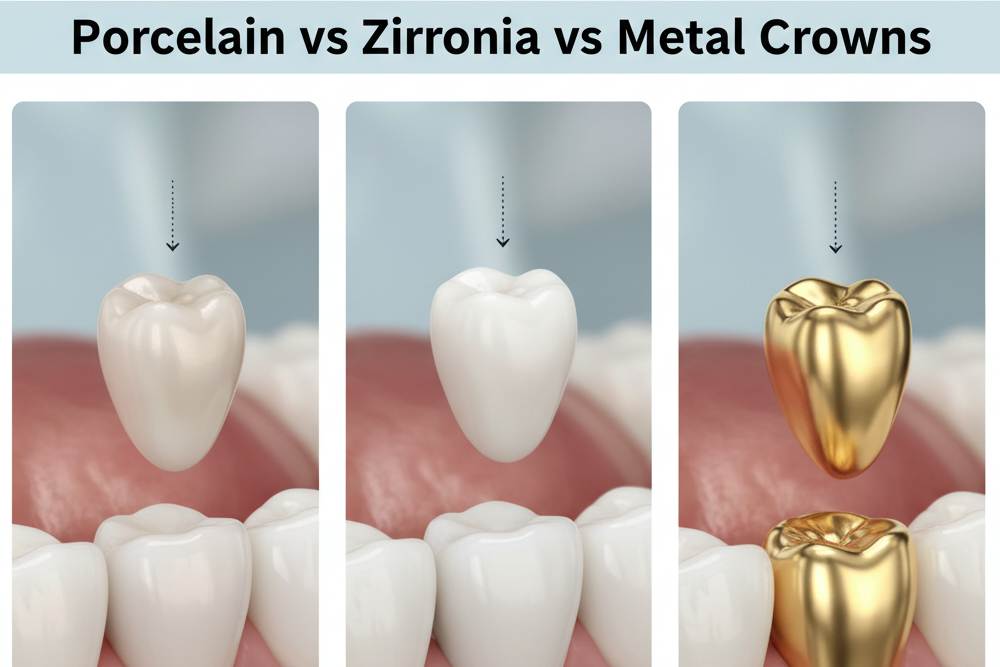
Porcelain crowns excel at mimicking the natural translucency and color variations of real teeth. This makes them particularly popular for front teeth, where aesthetics matter most. The material can be precisely shade-matched to your existing teeth, creating seamless integration with your smile.
However, porcelain has some drawbacks. It’s more prone to chipping or cracking under excessive force, which makes it less ideal for back teeth that endure heavy chewing pressure. Porcelain crowns typically cost more than metal alternatives but less than zirconia options.
According to research published in the Journal of Prosthetic Dentistry, porcelain crowns show excellent biocompatibility and aesthetic results, though they may require replacement sooner than metal alternatives due to wear patterns.
Zirconia Crowns: The Best of Both Worlds
Zirconia represents the newest advancement in dental crown technology. This ceramic material offers exceptional strength—nearly matching metal durability—while maintaining excellent aesthetic properties. Zirconia crowns resist staining better than natural teeth and can be color-matched with remarkable precision.
The strength of zirconia makes it suitable for both front and back teeth. It’s also biocompatible, meaning it rarely causes allergic reactions or gum irritation. The main disadvantage is cost, as zirconia crowns typically represent the most expensive option among the three materials.
Metal Crowns: Proven Durability
Gold and other metal alloy crowns have been used successfully for decades. They offer unmatched durability and longevity, often lasting 20+ years with proper care. Metal crowns also preserve more of your natural tooth structure since they can be made thinner than ceramic alternatives.
The obvious downside is aesthetics—metal crowns are highly visible and don’t match natural tooth color. This makes them unsuitable for front teeth in most cases. However, for back molars where function matters more than appearance, metal crowns remain an excellent choice.
Matching Natural Tooth Color for Aesthetic Success
The ability to match your natural tooth color varies significantly between materials. Porcelain offers the most natural translucency, allowing light to pass through similarly to real enamel. This creates depth and vitality that’s difficult to achieve with other materials.
Zirconia has improved dramatically in recent years. Modern zirconia crowns can closely replicate natural tooth appearance, though they may appear slightly more opaque than porcelain. The color stability of zirconia is superior—it won’t yellow or stain over time like natural teeth might.
Metal crowns obviously can’t match natural tooth color, but they can be designed with porcelain-fused surfaces for visible areas. However, this combination approach can sometimes result in a dark line at the gum margin as gums recede over time.
Weighing Durability Against Cost
Durability and cost often work in an inverse relationship with dental crowns. Metal crowns cost the least upfront and last the longest, making them the most economical choice over time. A gold crown might last 20-30 years, while porcelain crowns typically need replacement after 10-15 years.
Zirconia falls in the middle for longevity—stronger than porcelain but not quite matching metal durability. However, the higher upfront cost of zirconia may be justified by its combination of strength and aesthetics, particularly for visible teeth.
Consider your long-term dental health goals and financial situation. While metal crowns offer the best value proposition for back teeth, the aesthetic limitations make them impractical for front teeth. Porcelain provides beautiful results for front teeth but may require more frequent replacement.
Making the Right Choice for Your Situation
The best crown material depends on several personal factors. For front teeth where aesthetics are paramount, porcelain or zirconia typically provides the best results. Back teeth that endure heavy chewing forces may benefit from the durability of metal or zirconia crowns.
Your bite pattern matters too. If you grind your teeth at night, the added strength of zirconia or metal becomes more important. Budget considerations also play a role—while the cheapest option isn’t always the best value, you should choose a material you can afford to maintain properly.
Your Next Steps Toward a Restored Smile
Choosing the right crown material requires balancing multiple factors specific to your situation. Schedule a consultation with our dentist to discuss your options based on the tooth location, your aesthetic preferences, budget, and long-term oral health goals.
Remember that a crown represents a significant investment in your dental health. Take time to understand the pros and cons of each material before making your decision. With the right choice, your crown can provide years of confident smiles and comfortable function.